

Bouclé sofa pros and cons (pets, kids, real life)
Share
The short version: bouclé is soft, warm and forgiving on shape, and it hides everyday crumpling better than a flat weave — but its looped surface can catch on claws, holds crumbs and hair in the texture, and shows marks more readily in light colours. Whether that trade is worth it comes down to your pets, your kids and how you actually use the room.
Most of what is written about bouclé is either sales copy or scare stories. This is the balanced version: what the fabric does well, what it does badly, and how each of those lands in a house with a cat, a dog, small children, or all three. If you want the fabric explained first, start with what bouclé fabric actually is.
What are the pros and cons of a bouclé sofa?
Bouclé's advantages are comfort, warmth and how well it disguises normal use; its disadvantages are snagging on claws, trapping crumbs and hair in the loops, and showing marks in pale colours. Nothing on either list is a deal-breaker on its own — they just have to match your household.
Here is the honest split.
- Pro — it is soft to sit on. The looped yarn gives a cushioned surface rather than a flat one, so it feels warmer against skin than a smooth weave.
- Pro — it hides creasing. Texture breaks up light, so the crumpled look that shows on flat fabrics after an evening on the sofa is far less obvious.
- Pro — it does not need a loud colour. The texture carries the character, so bouclé works in plain, quiet colours that are easier to live with long term.
- Con — the loops can catch. Anything hooked and sharp — a claw, a zip, a collar tag, a stray staple in a toy — can pull at a loop. That is a property of the weave, not of any one brand.
- Con — texture holds what lands on it. Crumbs, biscuit dust, sand and pet hair sit in the loops rather than on top, so they need lifting out rather than brushing off.
- Con — light colours show marks sooner. True of any pale upholstery, and a textured surface gives a mark more edges to catch on.
If the cons describe your living room exactly, that is useful information — better found now than after delivery.
Is bouclé good for pets?
It depends far more on the animal than on the fabric. Bouclé generally copes well with pets that shed and lie on furniture, and less well with pets that use furniture with their claws.
The useful distinction is claws versus hair, and cats and dogs sit on different sides of it. Get that split right and most of the "is bouclé pet-proof" argument disappears.
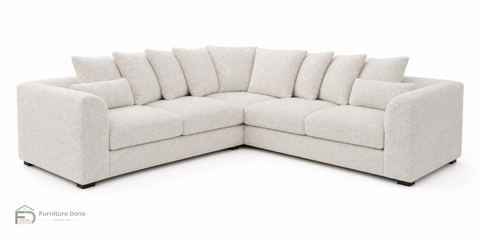
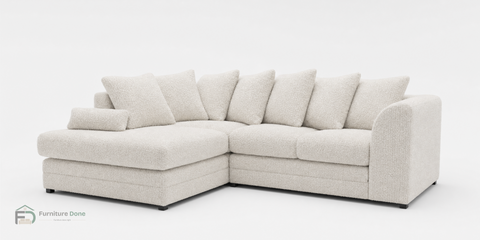
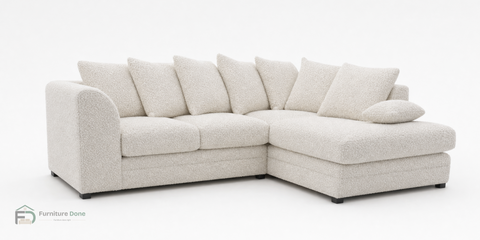
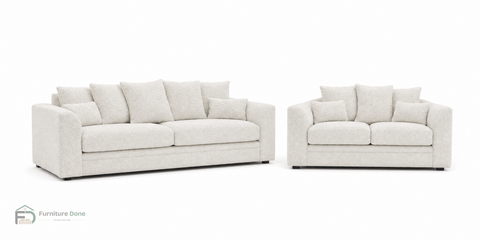
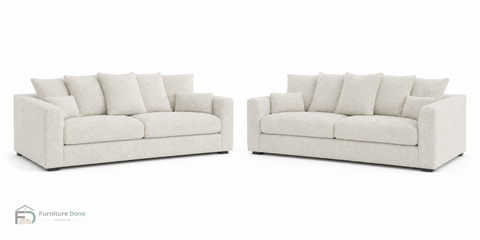
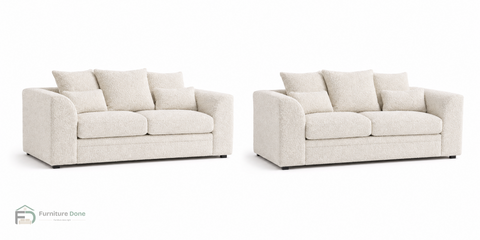
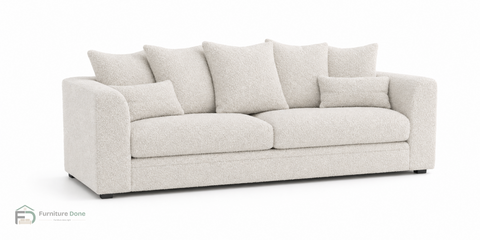
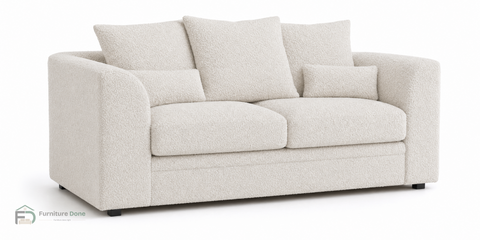
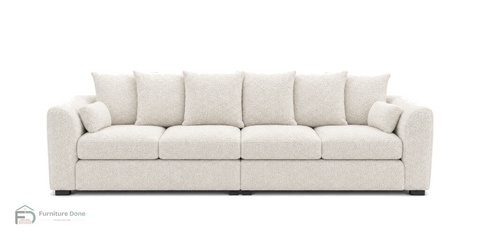
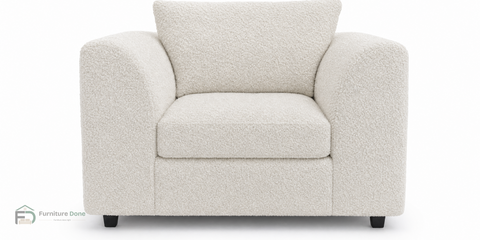
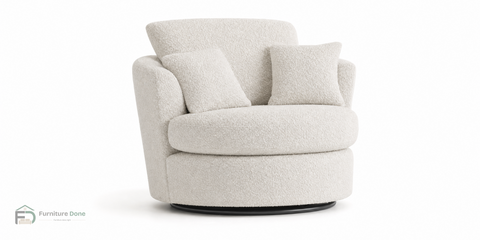
One structural point worth knowing: not all bouclé is woven to the same scale. A big, open, chunky loop leaves a lot of yarn standing proud for a claw to hook; a short, dense, tightly curled pile generally gives claws less to get hold of. Our own Teddy Bouclé sofas use a short, curled, dense pile — the texture of a teddy coat — and it is treated to be fire retardant. We will not tell you that makes it claw-proof, because no upholstery fabric is. What we can tell you is what the fabric is, so you can judge it against your own cat.
Can you have a bouclé sofa with cats?
Yes, plenty of people do — but cats are the harder case, because scratching is a claw-into-surface behaviour and a looped fabric gives claws something to grip. If your cat already scratches upholstery, bouclé is not the fabric that will change their mind.
What actually helps, in rough order of effect:
- Give them a better option, sited properly. A scratching post next to the sofa arm they already use beats one in another room. The fix is redirection, not deterrence.
- Keep claws trimmed. A blunt claw hooks a loop far less readily than a sharp one, and it is the cheapest intervention available.
- Protect the arms and back corners. Those go first, and a throw over the favoured arm takes the wear instead.
- Deal with a pull correctly. Never yank a pulled loop — snip it level with the surrounding surface with small, sharp scissors, and leave the weave around it alone.
- Choose a darker colour. Grey forgives paw prints in a way a pale sofa will not.
If your cat is a dedicated furniture-scratcher, be honest with yourself: any woven upholstery is a compromise, and bouclé more so than most. We would rather say that than sell around it.
What about dogs?
Dogs are usually the easier half. The dog problem is hair, mud and body oils rather than claws, and those are maintenance issues rather than damage.
Hair is the main one, and bouclé does hold it in the texture. A rubber pet-hair brush, or a slightly damp rubber glove drawn across the surface, lifts hair out of loops far better than a vacuum nozzle does. Do that weekly and it never builds into a job.
The claw risk is lower with dogs but not zero: dogs that dig at cushions before settling can pull loops the same way a cat can. A washable throw on their spot solves most of it. The full method for the rest is in how to clean a bouclé sofa.
Is bouclé a sensible fabric with kids?
It works well with children, with one condition: expect crumbs in the texture and be realistic about pale colours. The fabric is soft, warm and comfortable to sprawl on, which is most of what a family sofa is asked to do.
Crumbs and biscuit dust settle into the loops rather than on the surface. That sounds worse than it is — a vacuum with the upholstery brush, run along the seams and seat backs, takes it out in a couple of minutes. The habit matters more than the tool.
Spills are where a removable cover earns its keep. On our sofas the seat, scatter and kidney cushion covers come off and machine wash — always on a cold wash, never warm or hot. Spare cover sets are available too; get in touch if you want a set standing by. It is worth checking that on any sofa you are considering, ours or anyone else's.
How does bouclé wear in everyday use?
Like most textured upholstery, bouclé changes rather than fails: the loops flatten a little where you sit most, and the surface takes on the shape of your household. Whether that reads as character or as wear is genuinely a matter of taste.
Three habits keep it looking level for longer, and none of them are difficult.
- Rotate and swap the seat cushions every few weeks so one favourite spot does not do all the work.
- Keep it out of a permanent sunbeam. Strong direct sunlight fades textiles over time — a fact of every fabric, not a bouclé flaw.
- Vacuum before you clean. Grit ground into a looped surface does more damage than any spill.
What we cannot honestly tell you is how many years a particular sofa will look new. That depends on your household, and we are not going to invent a figure for it. Every sofa we sell carries a 12-month manufacturer's warranty, and there are 10 years of sofa craftsmanship behind the ranges — those we can stand behind.
So is a bouclé sofa worth it?
If you want a soft, warm sofa that forgives daily creasing, and you can live with lifting crumbs and hair out of the texture, then yes. If you have a cat that scratches upholstery, or a room where a pale sofa would be tested weekly, go in with your eyes open or choose a darker colour.
The one thing worth doing before you decide is feeling the fabric. Bouclé varies from a big open loop to a short dense pile, and a photograph flattens all of it — screens render texture and colour differently, and your room's light changes it again. Order fabric samples from fabrics and samples, put them on the sofa you have now, and look at them at night as well as at noon.
When you are ready, the range is on Teddy Bouclé sofas. Everything there is made to order in the UK, typically delivered in 1–2 weeks to mainland UK.