
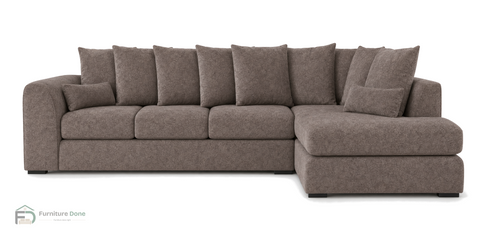
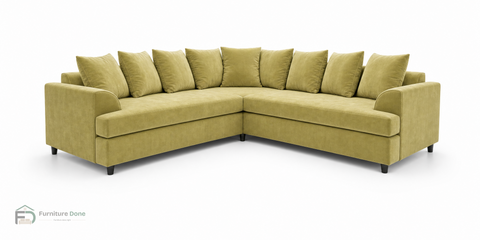
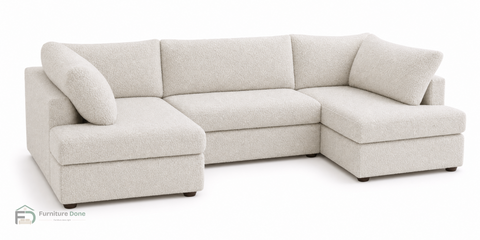
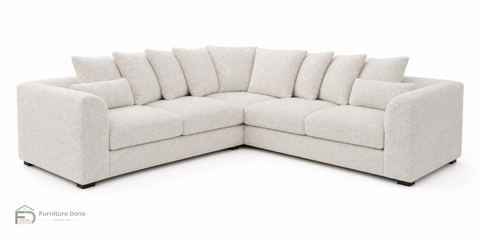
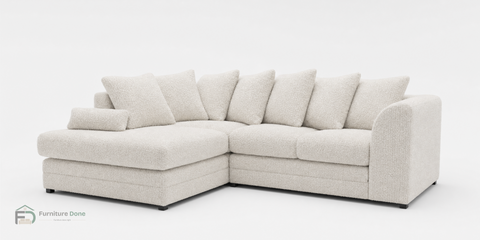
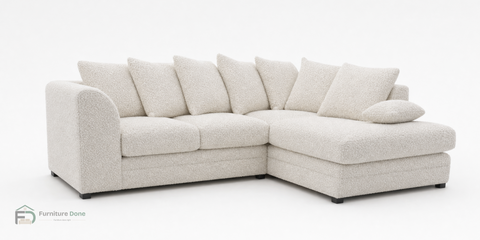
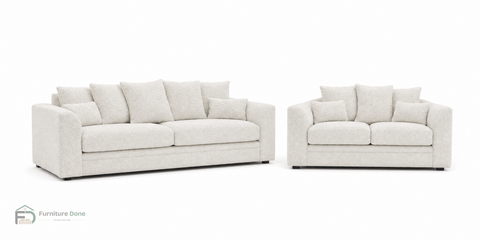
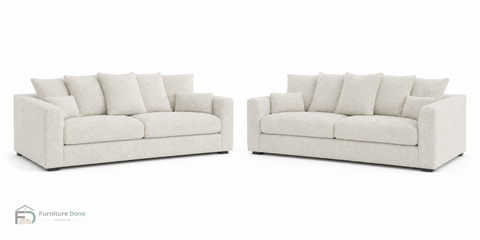
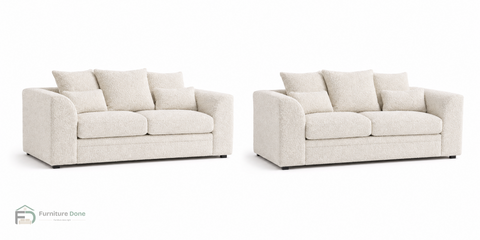
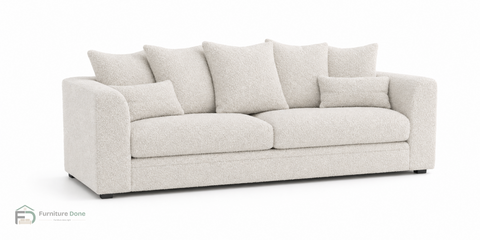
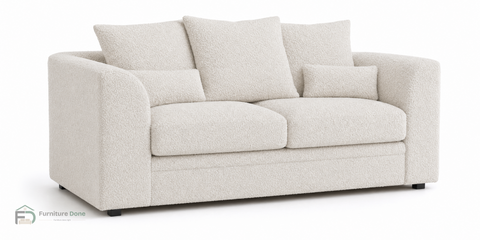

How to clean a bouclé sofa
Share
To clean a bouclé sofa: vacuum it regularly with a soft brush attachment, blot spills straight away rather than rubbing them, and test anything stronger than water on a hidden patch first. On our sofas, the seat cushion covers, the scatter cushion covers and the kidney cushion covers all come off and go in the washing machine — on a cold wash, always.
That is the short version. The longer version is worth reading, because bouclé is a looped weave and looped weaves reward slightly different habits than a flat fabric does. Below is the day-to-day routine, what to do about spills, what to do about a snag, and an honest answer on pilling.
Why does bouclé need a different approach?
Because bouclé is made of loops rather than a flat surface, and loops catch things. That is also exactly why the fabric looks the way it does — the texture and the loop are the same thing.
If you want the full explanation of how the yarn is made and what separates a teddy bouclé from other bouclé weaves, we wrote that up separately in what is bouclé fabric. For care purposes, the only thing you need to hold on to is this: with any looped weave, you work with the loops rather than dragging across them. No stiff brushes, no scrubbing, nothing that hooks.
How do you clean a bouclé sofa day to day?
Vacuum it, gently, with the soft brush attachment. That single habit does more for a textured sofa than any product you can buy.
Dust, crumbs and pet hair settle down between the loops rather than sitting on top, and once they are in there they act like grit every time somebody sits down. Getting them out early is the whole job.
- Use the soft brush head, not the bare nozzle. For most bouclé, a hard plastic nozzle dragged over the surface is the thing most likely to lift a loop.
- Go with the weave, not across it. Short, light passes rather than long scrubbing strokes.
- Do the crevices too. Under and behind the cushions is where most of it collects.
- Plump and rotate the cushions. Not cleaning as such, but it keeps the wear even, which keeps the texture even.
Can you put bouclé sofa covers in the washing machine?
On our sofas, yes — the seat cushion covers, scatter cushion covers and kidney cushion covers all come off and go in the washing machine. Wash them on a cold wash, always.
Cold is not a suggestion here, and it is worth being clear about why. A cold wash keeps the colour true and keeps the cover the size it was made. Warm or hot risks both — a cover that has shrunk even slightly is a cover that fights you every time you try to put it back on, and colour lost in a hot wash does not come back.
A few practical notes that go with that. Put the covers back on while they are fully dry, not damp. Wash a set together rather than one cushion at a time, so everything ages at the same rate. And if you would rather keep a second set in the cupboard for the week a cover is in the wash, spare cushion cover sets are available — get in touch and we will sort it out.
How do you get a spill out of a bouclé sofa?
Blot it, do not rub it. Press a clean, dry, light-coloured cloth onto the spill and lift; repeat with a fresh part of the cloth until nothing more transfers.
Rubbing is the mistake almost everybody makes. On a looped weave it pushes the liquid down into the loops instead of pulling it out, and it works the fibres against each other, which is how a clean patch ends up looking slightly different in texture to everything around it. Blotting is slower and it is the right answer.
Beyond that, a few general rules that hold for most bouclé:
- Speed beats technique. A spill lifted in the first minute rarely needs anything but a dry cloth.
- Work from the outside in. Otherwise you spread a small mark into a large ring.
- Test before you treat. Any cleaning product — including the gentle ones — goes on a hidden patch first, such as the back of a cushion, and gets left to dry fully before you judge it.
- Avoid harsh solvents unless you have tested them. Textured fabric shows a solvent ring more obviously than a flat one does.
- Let it dry naturally. No hairdryer, no radiator, nothing that puts direct heat on the fabric.
Does bouclé pill?
Any looped or heavily textured weave can fuzz, pill or snag with wear — that is a property of the construction, not a fault, and it applies across the bouclé category. When it happens, a fabric shaver or a careful trim with small scissors takes it off.
We would rather say that plainly than dodge it. Nobody can honestly promise you a textured fabric that will never bobble anywhere. What matters is that it is a tidy-up job rather than damage:
- Fuzz and bobbles. A fabric shaver, run lightly over the surface, or small sharp scissors if you only have a few.
- Focus on the friction points. Front seat edges and the arms see the most contact, so they show it first.
- Do it early. Little and often is much easier than one big session after a year.
What do you do about a snag or a pulled loop?
Trim it, never pull it. Snip the pulled loop level with the surrounding surface using small, sharp scissors and leave the rest of the weave alone.
Pulling is the one action that turns a two-second fix into a real problem, because on a looped weave the yarn is continuous — tug on one loop and you draw slack out of the loops either side of it. Trimming stops it dead. This is genuinely the most useful thing to know about living with any looped fabric, and it takes about five seconds to do.
Does bouclé work with pets?
Our Teddy Bouclé is pet-friendly. The thing to keep in mind with any looped weave is claws rather than fur — a claw can catch a loop, so trimmed claws and a throw over a favourite spot do most of the work.
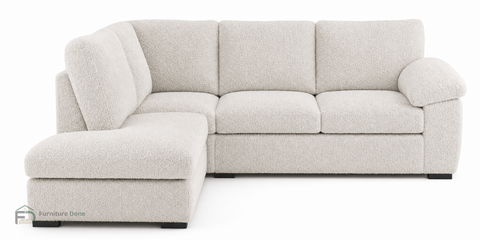
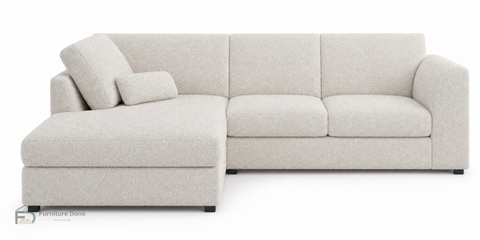
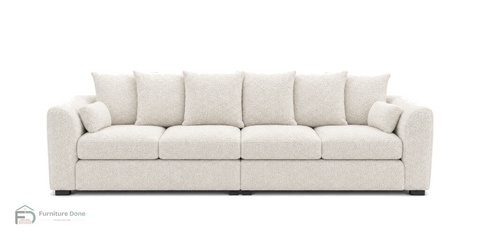
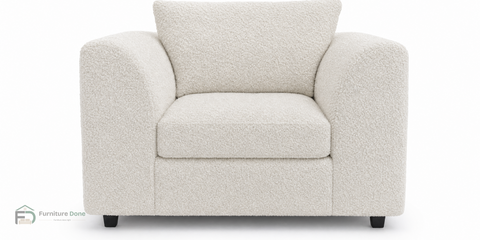
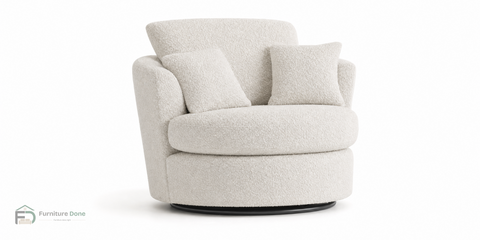
Fur itself is the easier half of the problem: it sits in the texture, and the soft brush attachment lifts it out. Teddy Bouclé is a short, curled, dense pile in White, Grey or Pink, and it is fire-retardant treated. If you are weighing bouclé up against other fabrics for a house with animals or small children, we go through that properly in bouclé sofa pros and cons.
How often should you clean a bouclé sofa?
Vacuum it whenever you vacuum the room it lives in, deal with spills the moment they happen, and wash the cushion covers when they need it rather than on a schedule.
That is really the whole routine. Bouclé care is not demanding, it is just specific: soft brush, blot don't rub, trim don't pull, cold wash. Four habits, and the fabric keeps its texture.
See the fabric before you decide
Colour and texture both read differently on a screen, and your room's light changes them again. Order fabric samples from our fabrics and samples page — hold a swatch against your wall, rub it, and see how it behaves before you commit.
When you are ready, the Teddy Bouclé sofas are all made to order in the UK and typically delivered in 1–2 weeks to mainland UK, with a 12-month manufacturer's warranty.