
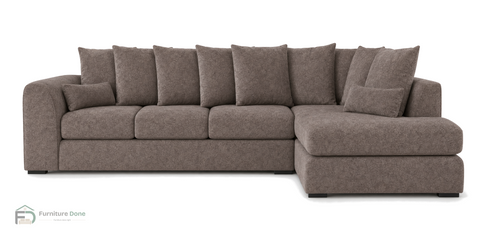
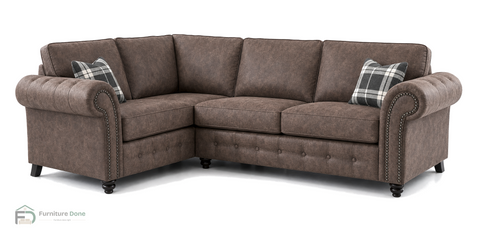
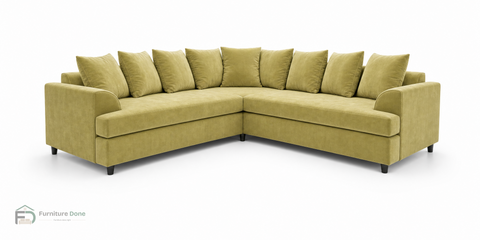
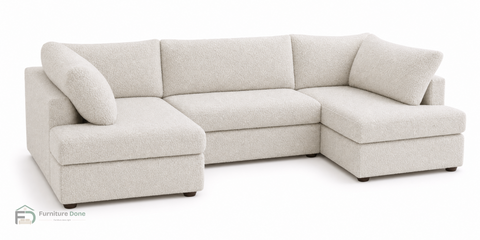
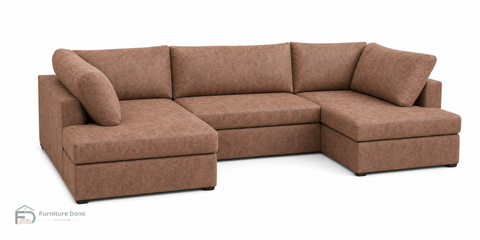
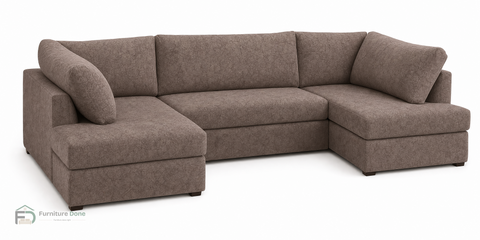
Will it fit?
Dimensions, range by range
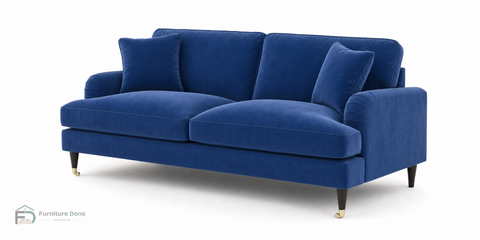
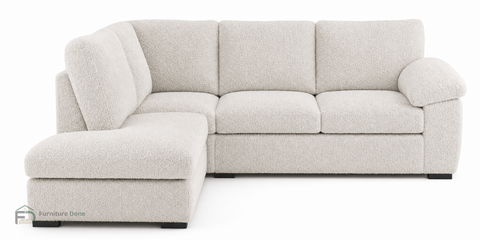
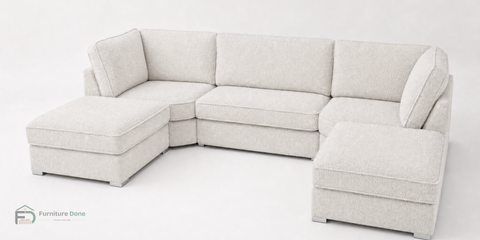
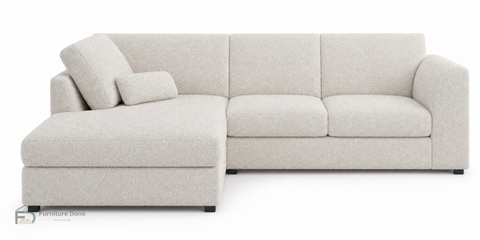
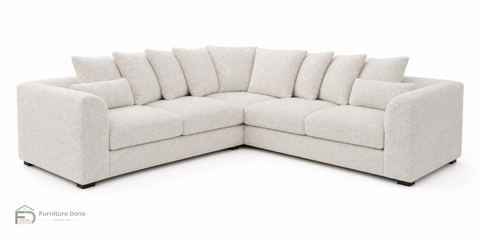
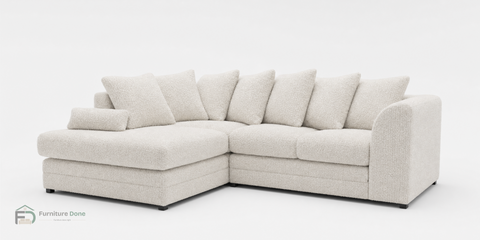
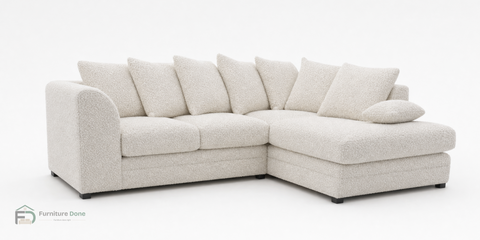
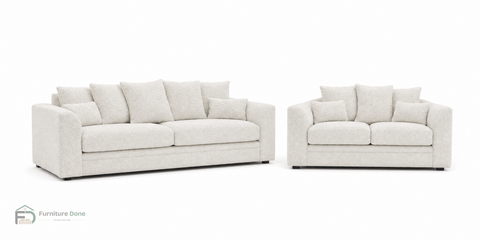
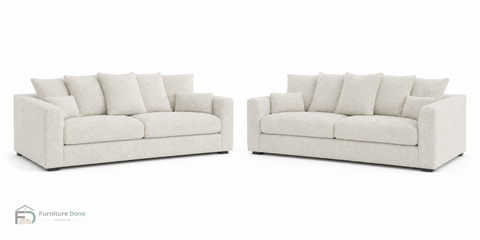
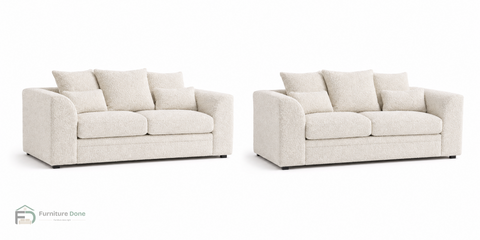
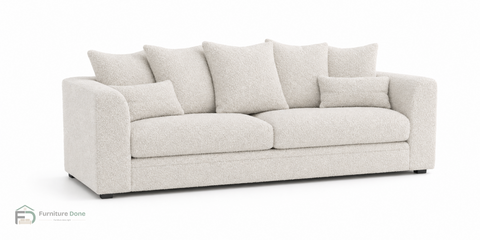
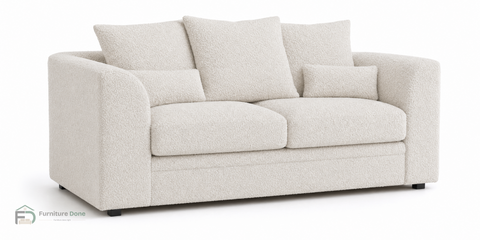
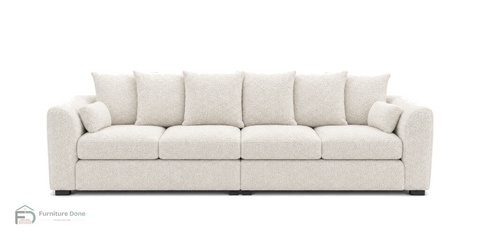
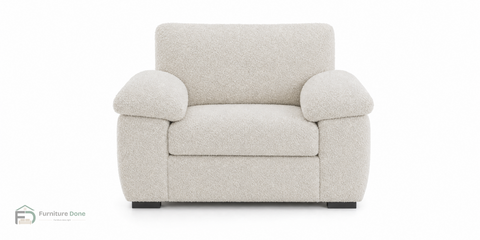
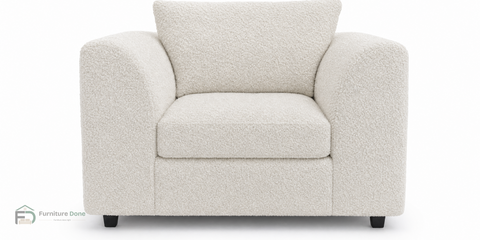
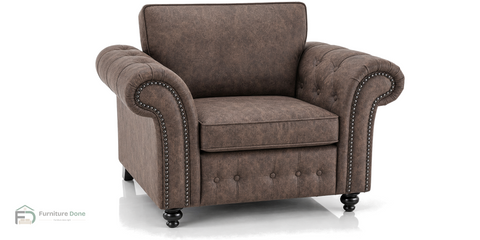
Pick a range to see every shape drawn to size. The same drawings sit on each product page, so what you measure here is what turns up.
Amalfi


Chicago Scatter Back


Chicago Full Back


Oakland


London

Ferguson

Bishop

Payton


Every drawing shows the sofa at its widest and tallest point, with the feet on. A sofa set is simply its two sofas together — a 3 + 2 is the 3 Seater and the 2 Seater drawn above.
Measure the sofa
Every sofa we sell lists its dimensions on the product page. Write those three numbers down — you'll be comparing everything else against them.
Width
Measure straight across at the widest point, arm to arm. On most sofas that's the outside of the arms, not the seat.
Depth
Measure from the back of the frame to the furthest point at the front. Scatter cushions and a rolled arm can push this out further than you'd expect.
Height
Measure from the floor to the top of the back, with the feet on.
Diagonal depth
Measure corner to corner — from the top of the back down to the front edge of the base. A sofa usually goes through a doorway tilted, so this is the number that decides whether it turns.
Allow for the packaging. We wrap our sofas securely, without bulky cardboard, so they still fit through tight gaps — but add a few inches or more on top of the sofa's own dimensions.
Measure the route
Walk it the way the sofa will: from the van, through the front door, to the room it's going in. Measure the tightest point on the way.
A sofa that fits the room can still fail at the second turn in a hallway. Measure every pinch point, then take the smallest one.
Doorways
Measure the opening with the door open, at its narrowest point. Handles, beading and draught strips all count. If the door can come off its hinges, measure both ways.
Hallways and turns
Measure the width of the hallway and, at any corner, how much space there is to swing the sofa round. A tight turn needs more room than a straight run.
Stairs
Measure the width between the wall and the banister, the headroom above the steps, and the space on any half-landing where the sofa has to turn.
Lifts
Measure the lift door opening, the internal depth and the internal height. Note whether the lift is the only route, or the stairs are an option.
The room itself
Mark the sofa's footprint on the floor with tape or newspaper before you order. Leave room for doors to open, radiators, and walking past.
Measure twice
Take each measurement a second time before you order. Tape measures slip, and a centimetre matters at a doorway.
Smallest number wins
The tightest point on the route is the one that decides. Compare it against the sofa's diagonal depth, not its width.
Write it down
Keep the numbers somewhere you can find them. If you ask us to check, they're the first thing we'll want.
The checklist
Work down this list with a tape measure. If everything clears, you're good.
Leave yourself room. Allow a few extra inches beyond the sofa's diagonal depth at the tightest point on the route.
Your sofa arrives in sections, and every one is made to pass through a standard UK doorway. The route still has to clear.