
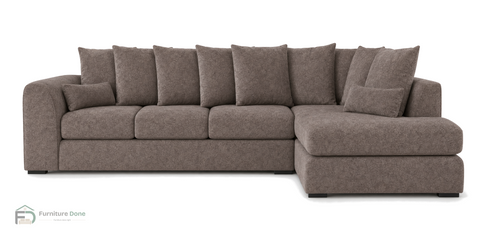
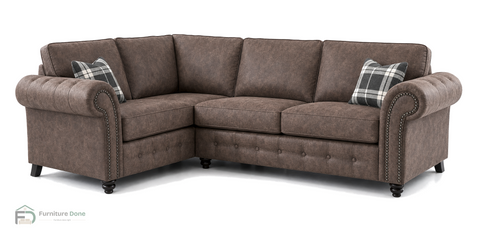
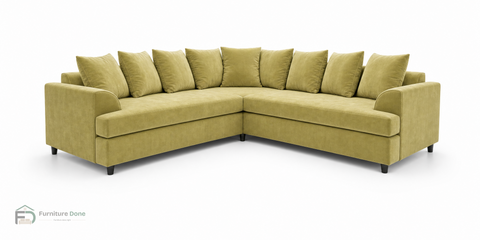
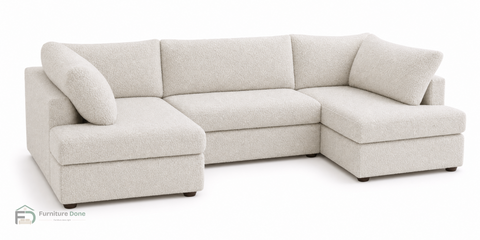
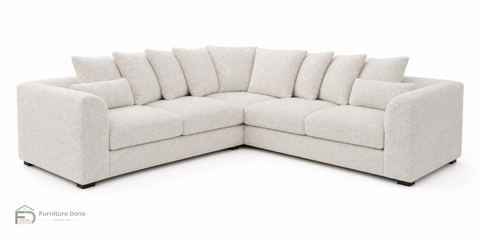
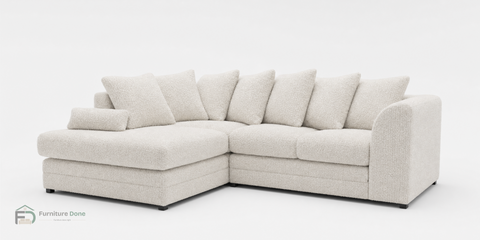
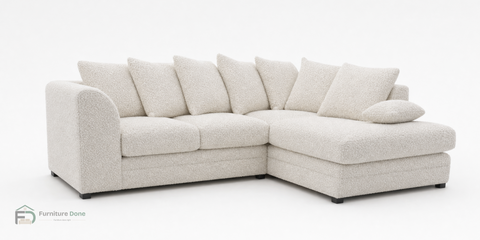
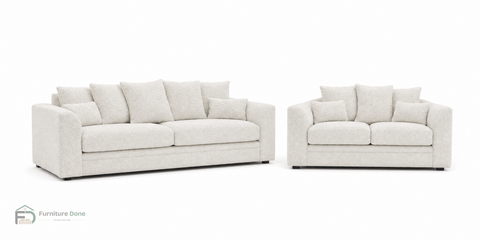
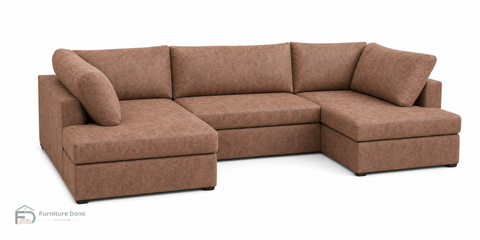
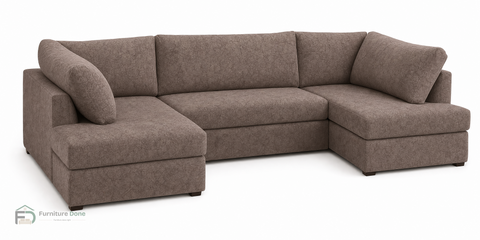

Left-hand or right-hand corner sofa? How to tell which one you need
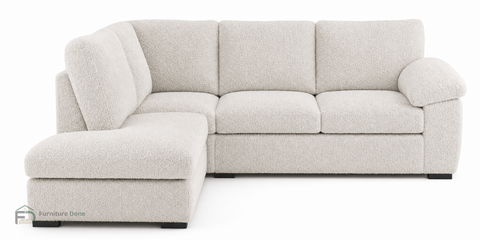
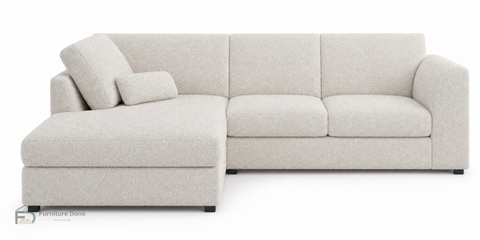
Stand in front of the sofa and look at it. If the corner or chaise section is on your left, it is a left-hand corner sofa. If it is on your right, it is a right-hand corner sofa. That is the convention we use across this site.

Orientation is described as you face the sofa.
It is a simple rule, and it is also the easiest thing to get wrong when you buy a corner sofa online — because not every retailer describes orientation the same way. Below is how to work out the hand your room needs, how to check yourself before you order, and what happens if you change your mind.
How do you tell which hand you need?
Picture the sofa in the empty space from the front, the same way you look at a product photo. The corner section sits in the corner of the room and the long side runs along a wall. If the corner lands on your left as you look at the space, you need a left-hand corner sofa.
Walk the room before you look at products
Five minutes in the room settles it. Work through these in order:
- Find the long side. Which wall is the long run of seating going along? That wall decides the hand — everything else is a check on it.
- Check the doors. A door that opens into the room needs clear floor to swing. Put the long side away from it if you can.
- Look at the windows. Covering a window with a tall back changes how the room feels and blocks the handle if the window opens inwards.
- Find the radiator. Pushing a sofa back against a radiator traps the heat. If one wall carries the radiator, that is usually the short side.
- Sit where you watch from. Stand or sit at the TV position and look back. The seats you use most should face it squarely, not across a corner.
Then measure. Our measuring guide covers doorways, hallways and the route in, and how to measure your room for a corner sofa takes you through the floor space itself. Do the measuring after you have picked the hand — a sofa that fits on the wrong side is still the wrong sofa.
The check that catches most mistakes
Stand at the doorway, look at the space, and say it out loud: “the corner goes on my left”. Then look at the product photo head on and say the same thing about the picture. If the two sentences match, you have the right hand. If you find yourself imagining sitting on the sofa to answer, start again — that is where it goes wrong.
What is the most common mistake?
Describing the sofa as you sit on it rather than as you face it. It flips the answer completely: the corner that is on your left when you look at the sofa is on your right once you are sitting on it. Both descriptions feel natural, which is why people order confidently and still get the opposite hand.
Fix it by keeping one viewpoint the whole way through — standing in front, looking at the sofa. Use that for the room, the photo and the product page, and do not switch halfway.
Do all retailers describe it the same way?
No, and this is the real trap. Conventions vary between retailers: some describe the hand as you face the sofa, some as if you are sitting on it, some use “left-hand facing” or “LHF” without saying facing from where, and some only show a plan drawing. Always check how the retailer you are buying from describes it, and never carry an answer from one site straight to another.
Ours is stated on the page and in the diagram above: as you face the sofa. If you already know which hand you need, go straight to left-hand corner sofas or right-hand corner sofas. If anything on a product page reads ambiguously to you, ask us before you order rather than guessing.
What if my room could take either?
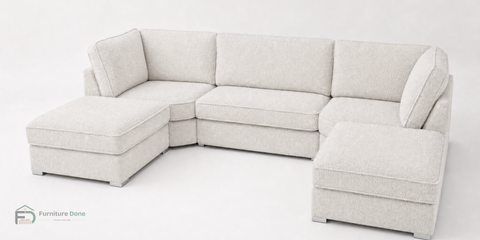
Then choose on movement rather than looks, or choose a symmetrical corner sofa, which has a matching return on both sides and no hand to get wrong.
If you are deciding between the two hands in a room that would take either:
- Protect the walkway. Keep the main route through the room — door to door, or sofa to kitchen — running past the short side, not across the long one.
- Watch the door swing. Open every door in the room fully and see what it would hit. A door that only opens halfway is a daily annoyance.
- Think about sockets and the radiator. Whichever side ends up against them is the side you will be reaching around.
- Consider where you will move next. A symmetrical corner is the safer choice if you expect to rearrange the room, or move house, before you replace the sofa.
Can you change your mind after ordering?
Yes. Tell us within 24 hours of placing your order and we will change or cancel it free of charge — including switching the hand. Beyond that, you have the right to cancel from the moment you order until 14 days after delivery, for any reason, without giving one.
You should not have to rely on either, though. Real people answer messages in our Customer Service team, so if you are unsure which hand your room needs, describe the room to us and we will talk it through before you order. Order fabric samples at the same time if the colour is still open.
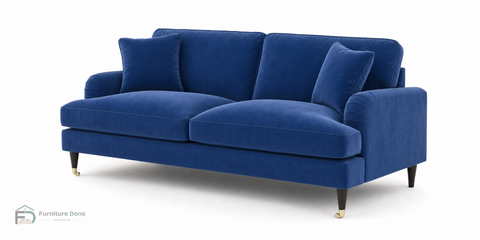
Every sofa is made to order in the UK, typically delivered in 1–2 weeks; Payton sofas take typically 1–4 weeks.
The short version
- Face the sofa. Corner on your left is left-hand; corner on your right is right-hand.
- Never work it out as if you were sitting on it.
- Conventions vary between retailers — check each one's own diagram.
- Room could take either? Choose on walkways and door swings, or go symmetrical.
- Still unsure? Ask us first — you have 24 hours to change the order free of charge, and the right to cancel until 14 days after delivery.